
Long Braid Cap RFQs: Define the Finished Length
How should a long braid cap length be specified in a wholesale enquiry? Identify the offered version, distinguish the complete item from each extended section, and ask the supplier to mark the start and end of every requested length. The response should include the unit, the product state used for measurement and a matching drawing or sample reference. A number becomes useful only when both parties understand the same measurement field.
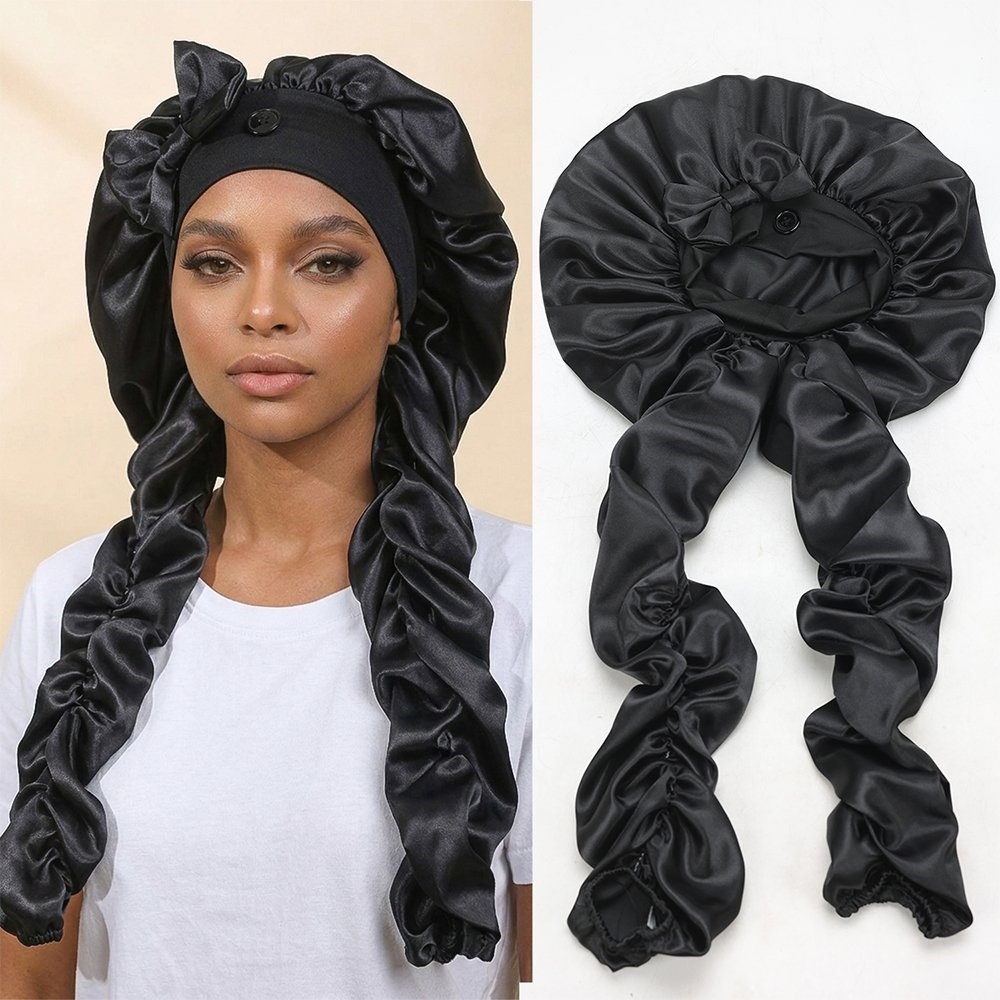
Long braid cap catalogue reference. The supplier must define the offered version and its finished measurement endpoints; the photograph supplies no dimensions or fibre declaration.
Identify the catalogue item before defining length
Dingcai lists a product titled Dreadlock Elastic Long Braid Cap. Its catalogue image presents the cap in worn and laid-out views with long extensions. Use the product reference to begin an enquiry, then ask the supplier to identify the exact version being offered. The image helps locate the product; the factory response should define the measurable parts.
A purchasing team may use overall length, cap-body length and extension length as shorthand, but these terms need their own definitions. They can describe different parts of the item and cannot automatically replace one another. Put each requested field on its own line so the supplier can confirm which part is included and which reference the response represents.
Name the endpoints instead of relying on a label
Ask the supplier to annotate the origin and endpoint of the proposed measurement. Where an extended section joins the cap, specify whether the requested length begins at the visible junction, another construction point or a supplier-defined reference. Let the manufacturer identify the actual construction before the buyer freezes that description.
The endpoint also needs a clear meaning. Ask which finished edge or terminal point is used and whether any shaped end is included. If the reference point is difficult to see, request a labelled close view or drawing. Keep the written field name beside the annotation so that a later colleague does not have to infer the measurement from a line alone.
Buying field
Requested supplier response
Offered version
Supplier item identity and the product or sample revision represented.
Complete-item length
Whether an overall field is offered, with the included regions and both endpoints marked.
Extension identity
Separate names or labels for each extended section that requires a response.
Start and end
Manufacturer-confirmed reference points linked to an annotated view.
Product state
The supplier-defined position and condition used for that measurement.
Units
An explicit unit beside every returned value or shared clearly by the schedule.
Sample linkage
The identified sample and drawing version to which the response applies.
Open differences
Any field still requiring clarification before the buyer accepts the reference.
Record the state of the finished item
A length description should explain how the item is presented when the measurement is taken. Ask the supplier to state the product position, the relevant finished condition and any handling used to obtain the stated result. Do not introduce a stretching force or other measurement procedure without a manufacturer-defined basis.
The word Elastic appears in the supplier product title, but that word does not provide a verified extension range, recovery result or fit specification. Keep a finished-length request focused on the geometry being quoted. If another property matters to the purchase, ask a separate question and retain the supplier evidence under that property rather than blending it into the length field.
Separate African Gele catalogue product. Its styled appearance does not establish whether the item is supplied formed, assembled or as an unformed wrap.
Keep the related headwear products distinct
The official related-product references include an African Gele headwrap and a fleece-lined durag. They are useful examples of different headwear forms in the catalogue, but their appearance does not define a long braid cap measurement. A styled headwrap image, for example, cannot supply the endpoints or product state for the extended sections of another item.
When sourcing several headwear products, create a separate measurement record for each offered model. Link its own drawing and sample, even when the same supplier handles the enquiry. This makes the purchasing file easier to compare without carrying a measurement name, material description or proposed value from one product into another.
Ask how the extended sections are represented
If more than one extended section is present on the offered version, ask the supplier to identify them individually. A shared value should be described as applying to named sections, rather than assumed from the symmetry of a photograph. Where the factory proposes different definitions, retain each definition with its corresponding position label.
A photo taken from an angle may hide where one part starts, while a worn view may arrange the material differently from a laid-out sample. Use these views to frame a clarification request. The accepted drawing or supplier description should resolve the field identity; the buyer should not derive a dimensional value by measuring pixels on the catalogue image.
Separate durag catalogue product. Fleece-Lined is the supplier title; the picture does not independently establish lining location, fibre composition or thermal performance.
Turn the reply into a reusable purchase reference
Review the returned schedule for completeness before comparing offered versions. Check that every value has a field name, endpoint definition and unit, and that the named sample matches the offered item. Separate unanswered fields from accepted ones. This prevents an incomplete reply from becoming an accidental specification when the purchasing worksheet is reused.
Once the reference is agreed, carry the same labels into the sample decision and supplier acknowledgement. If a later version changes an attachment point or finished shape, ask which length fields are affected and request an updated reference. Retain the previous response as history while making the accepted revision clear for the next enquiry.
Identify the actual offered long braid cap version.
Separate overall and individual-section length fields.
Link endpoints, units and product state to a supplier reference.
Keep the accepted drawing and sample revision together.
Buyer FAQ
Does overall length mean the same as extension length?
Only if the supplier explicitly defines them that way. Request a separate field and endpoint description for each required measurement.
Can a buyer obtain dimensions from the catalogue image?
Use it to identify the product and ask questions. Request actual dimensions and their reference points from the supplier.
Does the product title establish a stretch range?
No verified range is supplied by the title. Keep any separate property enquiry linked to its own manufacturer response.
What should accompany a revised length proposal?
Retain the offered-version identity, changed endpoint or state description, unit and matching drawing or sample revision.
Identify your enquiry using the long braid cap product reference, request a supplier-marked finished-length schedule, and use the headwear purchasing blog for related sourcing questions.
wholesale dreadlock elastic long braid capsB2B supplier sample record