
Fleece-Lined Durag RFQs: Map the Lining Scope
A fleece-lined durag enquiry should ask the manufacturer to map the lining to the actual offered headwrap. Dingcai’s catalogue names a Fleece-Lined Durag Headwrap and shows several appearance references, but the title and photographs do not identify every lined area or provide a fibre declaration. Request a component record connecting the supplier’s outer-face and lining descriptions to the exact quoted version.
Separate durag catalogue product. Fleece-Lined is the supplier title; the picture does not independently establish lining location, fibre composition or thermal performance.
Start with the durag being offered
Use the supplier’s full product reference and the proposed quotation or sample identity. A general request for a fleece-lined durag may leave the factory to choose a version that the buyer has not identified. Ask which item the offer covers and whether the accompanying picture or sample is the reference for that proposal. Keep any alternative version separate until the supplier explains its applicability.
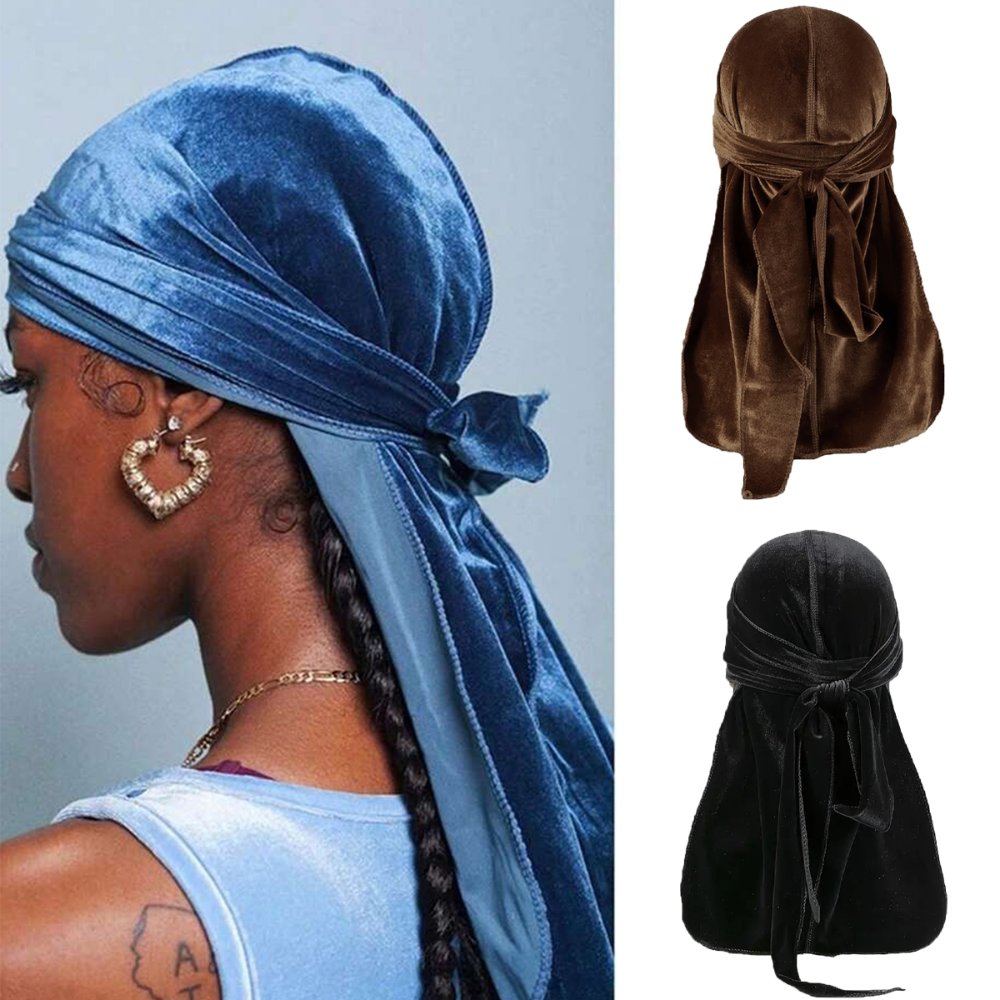
The catalogue composite shows a worn headwrap and rear-view presentations in several colours. These help locate the enquiry within the supplier’s range, but they do not establish that every shown option has an identical lining arrangement. Ask the manufacturer to identify which version its material and component information describes, rather than extending one declaration across every pictured presentation.
Request a named map of outer face and lining
Ask for the manufacturer’s own component names or a labelled drawing identifying the outer face and each area it declares as lining. Where the supplier distinguishes the main head-covering section, band, ties or trailing section, retain those names with the corresponding material fields. Do not decide which parts are separate components solely from a seam or fold visible in the catalogue photograph.
A useful response connects each declared component to its location on the offered product. It should make clear whether a lining statement covers that whole component or a manufacturer-defined area. If an area is not explained, leave its scope open for confirmation. A familiar product name should not become a substitute for a component-level description that the supplier has not supplied.
Long braid cap catalogue reference. The supplier must define the offered version and its finished measurement endpoints; the photograph supplies no dimensions or fibre declaration.
Keep the material declaration tied to the area
Fleece-Lined is the supplier’s catalogue description, not an independent composition finding. Request the applicable material name, fabric code or composition declaration where the manufacturer provides one, and ask which component it covers. The glossy or textured appearance of an outer surface does not establish the fibre content of that surface or the identity of a layer behind it.
Keep an outer-face declaration distinct from a lining declaration even if the supplier uses similar descriptive words for both. Where a fabric code is supplied, retain its revision or reference alongside the relevant area. Do not fill missing percentages, thickness, weight or other construction fields from a neighbouring product. Those values require their own applicable manufacturer information if they are needed for the enquiry.
Buying field
Requested supplier response
Offered durag
Exact manufacturer model/version and quote or sample reference.
Component map
Supplier-named sections and identified outer-face or lining areas.
Material identity
Applicable declaration or fabric code attached to each stated component.
Coverage boundary
Manufacturer explanation of the area covered by each lining statement.
Record version
Document or sample identity and later changes relevant to the offer.
Ask where the lining description stops
A headline lining description may not answer every component question in a buying enquiry. Ask the supplier whether its declared lining coverage extends to each section it has identified, and request a clear response for any area outside that scope. This does not assume that a particular section is lined or unlined; it gives the manufacturer a way to state the actual arrangement.
Avoid turning the catalogue picture into a cross-section. A fold, tied area or visible edge may conceal layers rather than explain them. The purchasing record should use the supplier’s component mapping and an identified sample or document, instead of a buyer’s reconstruction of the interior. Any unanswered coverage field can remain pending without being described as a confirmed product feature.
Separate African Gele catalogue product. Its styled appearance does not establish whether the item is supplied formed, assembled or as an unformed wrap.
Use the other headwear as separate references
The same catalogue presents a long braid cap and an African Gele headwrap with different visible forms. Their images show other products within the supplier’s headwear range. They do not establish that those products have the durag’s declared lining, that the durag uses their fabric, or that any of the three share a common internal construction.
Give a separate component request to each product being considered. A comparison can identify the exact item and document supplied for each offer without copying an unconfirmed material field between models. Likewise, a similar colour or surface sheen does not create a shared fabric identity. Keep each supplier response attached to the item it actually describes.
Match the map to the sample and quotation
Retain the supplier’s component record with the offered version and applicable sample reference. If the manufacturer supplies a revised lining or outer-face description, ask which earlier proposal it replaces and which areas changed. This helps a purchasing reviewer connect a later material response to the correct quotation instead of relying on a general statement about the product family.
A component declaration explains the information being offered; it does not by itself verify thermal performance, moisture behaviour, stretch, hair protection or a washing result. Those are separate claims with their own applicable evidence and conditions. The present enquiry can close the identity and scope of a lining record while keeping any distinct performance or care question outside that conclusion.
Buyer FAQ
Does the title establish the lining’s fibre composition?
No. Request the manufacturer’s applicable material declaration or fabric reference and identify the component it covers.
Can a catalogue fold show every lined area?
No. Ask for supplier-defined component locations and coverage boundaries linked to the offered version.
Should the braid-cap image supply the durag material field?
No. It is a different product reference. Keep each manufacturer declaration with its own model and sample.
What belongs with the quotation?
Keep the durag identity, component map, outer-face and lining declarations, coverage scope and current document or sample reference.
Begin with the Fleece-Lined Durag catalogue entry, use the Dingcai headwear articles as broader context, and request the offered version’s lining record.
Identify the actual offered durag version.
Request named outer-face and lining areas.
Keep material records and coverage boundaries with the matching sample.
wholesale duragsB2B supplier sample record